About Program
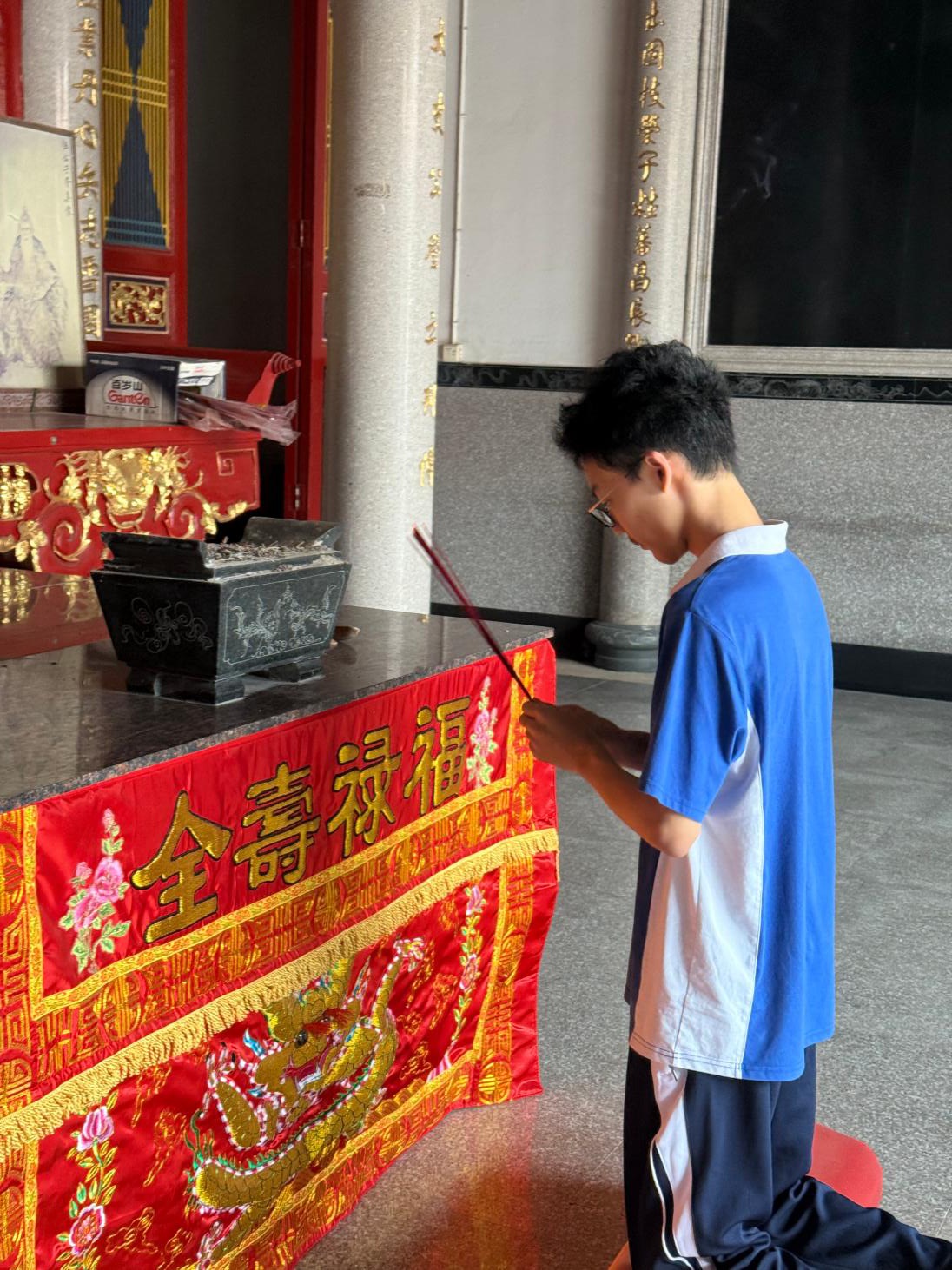
When I was very little, every time I returned to the clan ancestral hall to perform ancestor-worship rites, I did not really understand what I was doing, but I found it interesting to copy the adults. If my parents told me to arrange the ritual offerings, I arranged them. If the elders reminded me to kneel and kowtow, I followed. After the incense and candles were lit up, I would stand quietly to the side. The smoke, the flames, and the unfamiliar solemnity of the ritual absorbed me. Back then, worshipping the ancestors in the ancestral hall felt like an intriguing part of the Chinese New Year.
As I grew older, I had a deep emotional attachment to my clan. My clan gave me a root. Whenever I returned to Fujian, even relatives I barely knew welcomed me warmly simply because we shared the same blood, giving me an unconditional sense of belonging that deeply moved me. During the Chinese New Year, I returned to the ancestral hall again. I laid out the offerings, offered incense, and joined the ancestral worship as usual. After the ritual ended, I did not leave immediately. Instead, I walked slowly around the hall. The wooden beams still held the color of age; incense ash had settled beside the burner; the plaques and ancestral spirit tablets on the walls stood quietly in their rows. Then I noticed a clan genealogy and casually began to turn its pages. I saw the traditional Chinese characters and page after page of lineage records. I suddenly saw my grandfather’s name.
At that moment, I felt something strange, almost difficult to describe. My grandfather, my father, I, and the ancestors who came long before us seemed to be strung together by the same line. Time, in that moment, no longer felt as if it only flowed from the past toward the present. Instead, it briefly folded together inside the ancestral hall: the names on the paper, the incense burning before the spirit tablets, and I standing there were all placed into the same family story.
Carved into the stone walls of the ancestral hall are rows of donation records. An ancestral hall has to be repaired and maintained over its long history. The eaves, walls, wooden beams, and altar tables all depend on the shared support of the clan members. The names on the donor list came from the local community, from Southeast Asia, and even from places farther away. Those names made me think of the many people who had once left Fujian but still chose, even from overseas, to send both money and goodwill back to their hometown. They still had connections, however distant, to that hall. Yet when I asked about the situation today, the clan elders told me that overseas donations had become fewer and fewer. Many members of the younger generation were no longer very willing to take part, and some could no longer even be contacted.
This made it impossible for me to see the ancestral hall merely as a building that preserves the past. It made me begin to ask: the names on the stone wall are still there, and the names in the genealogy are still there, but can the feeling behind those names still be passed down from generation to generation? Do overseas Chinese and ethnic Chinese of Fujian origin who left their homeland still regard Fujian as home in their hearts? If their children were born and raised overseas, unable to speak Fujian dialect, or even unable to speak Chinese, what would Fujian still mean to them? With these questions in mind, I began this investigation into homeland memory and among overseas Chinese of Fujian origin.
I interviewed Fujianese people living in countries and regions such as the United Kingdom, Australia, Japan, and Indonesia. I also spoke with clan association leaders, elders, and young people in Fujian itself. In addition, I conducted a questionnaire survey and collected more than 60 valid responses. The research process was not easy. First, finding interviewees required me to draw on different personal networks and persuade people living far away in other countries to take part. Second, arranging the interviews was difficult because the participants lived in different time zones and had their own work and family lives, so the interview times often had to be coordinated again and again. Moreover, many interviews were not as clear and orderly as questionnaire responses. Some people would drift into completely unrelated topics as they spoke, while others had strong accents, so I had to listen to the same sentence several times before I could fully understand it. Despite these difficulties, I eventually completed all the interviews and questionnaires.

At first, I thought I was simply recording and organizing materials. Later, I realized that what I was really doing was searching, among voices and pages that were close to scattering, for a line that had not yet been broken.
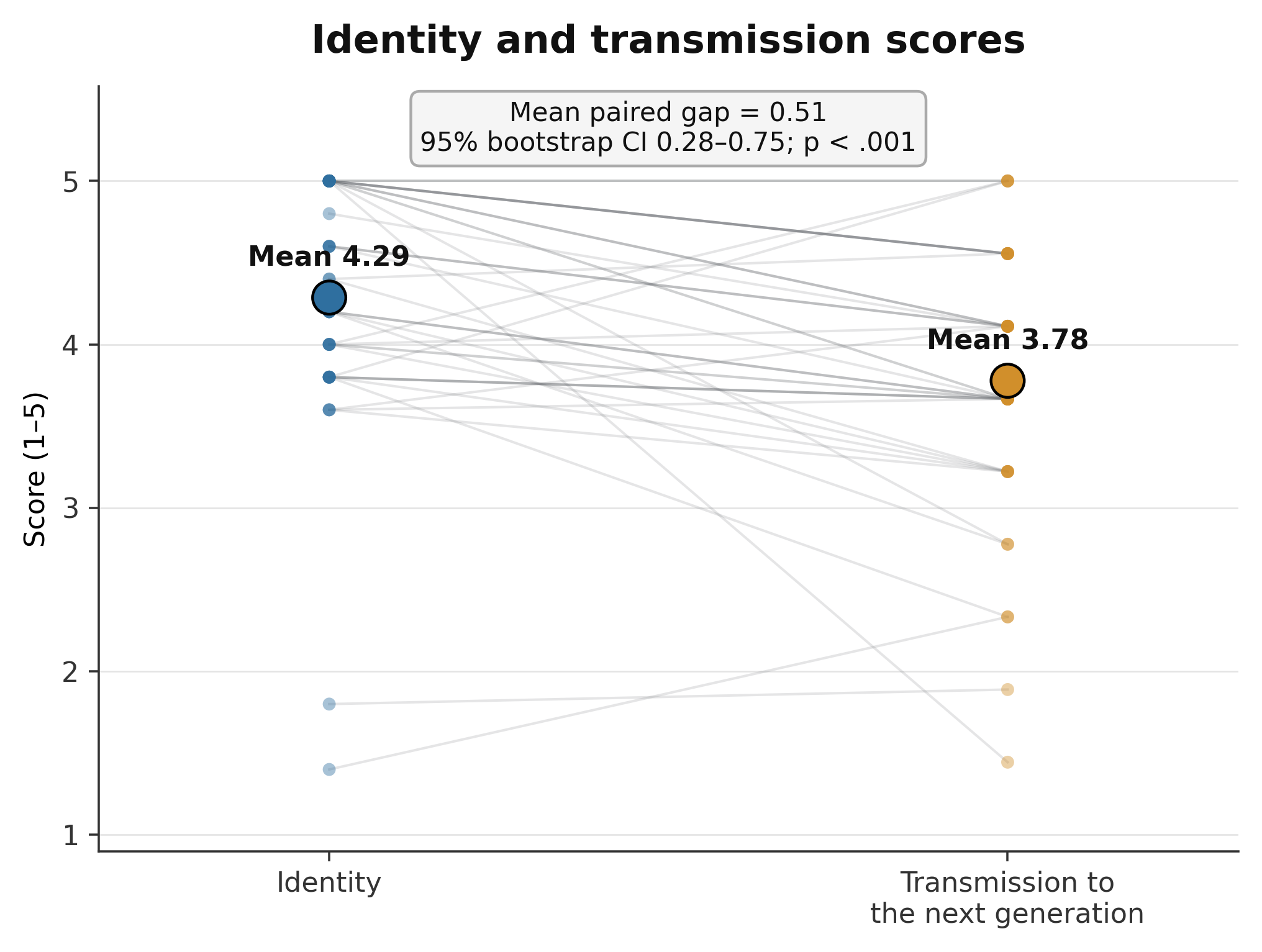
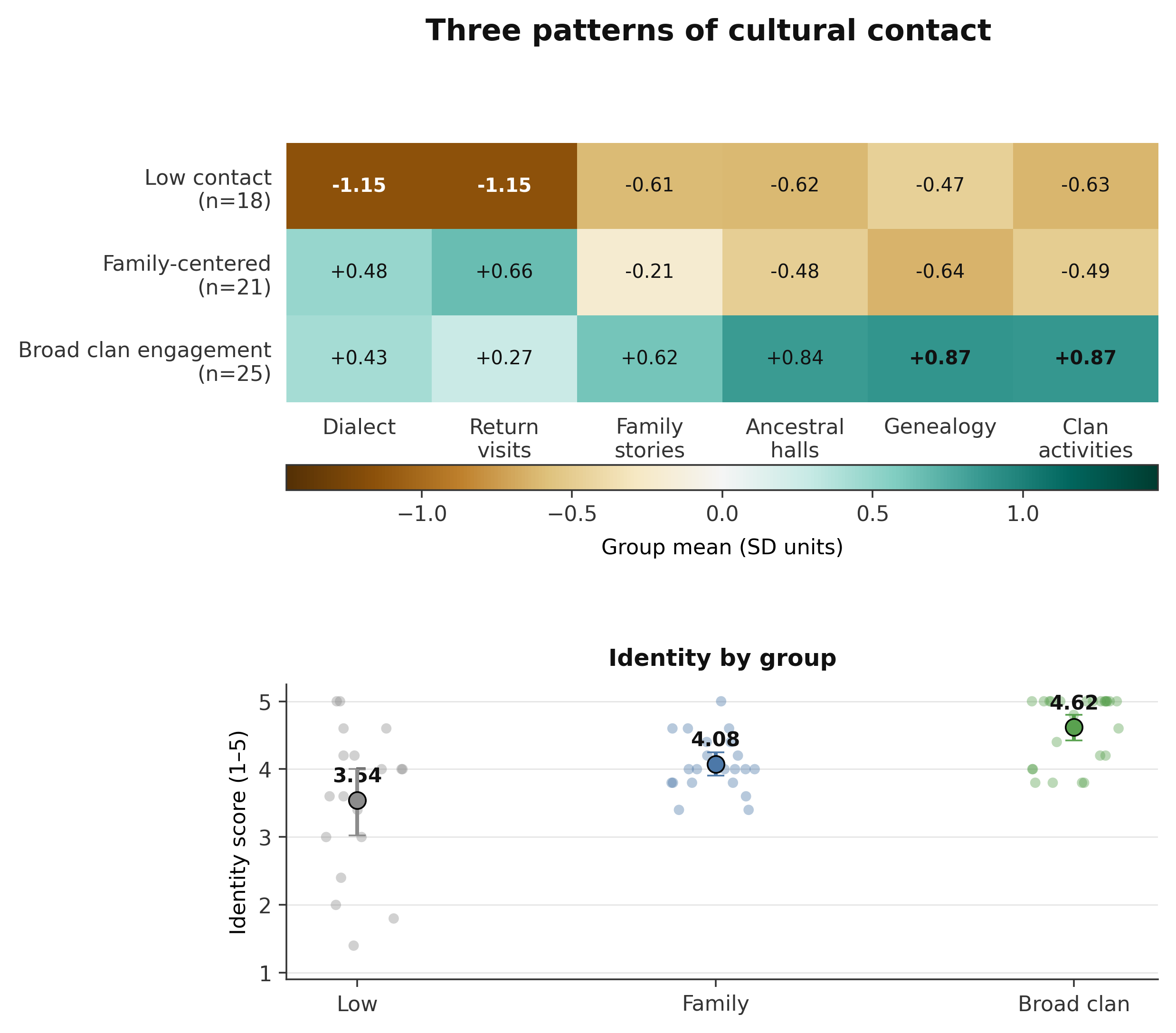
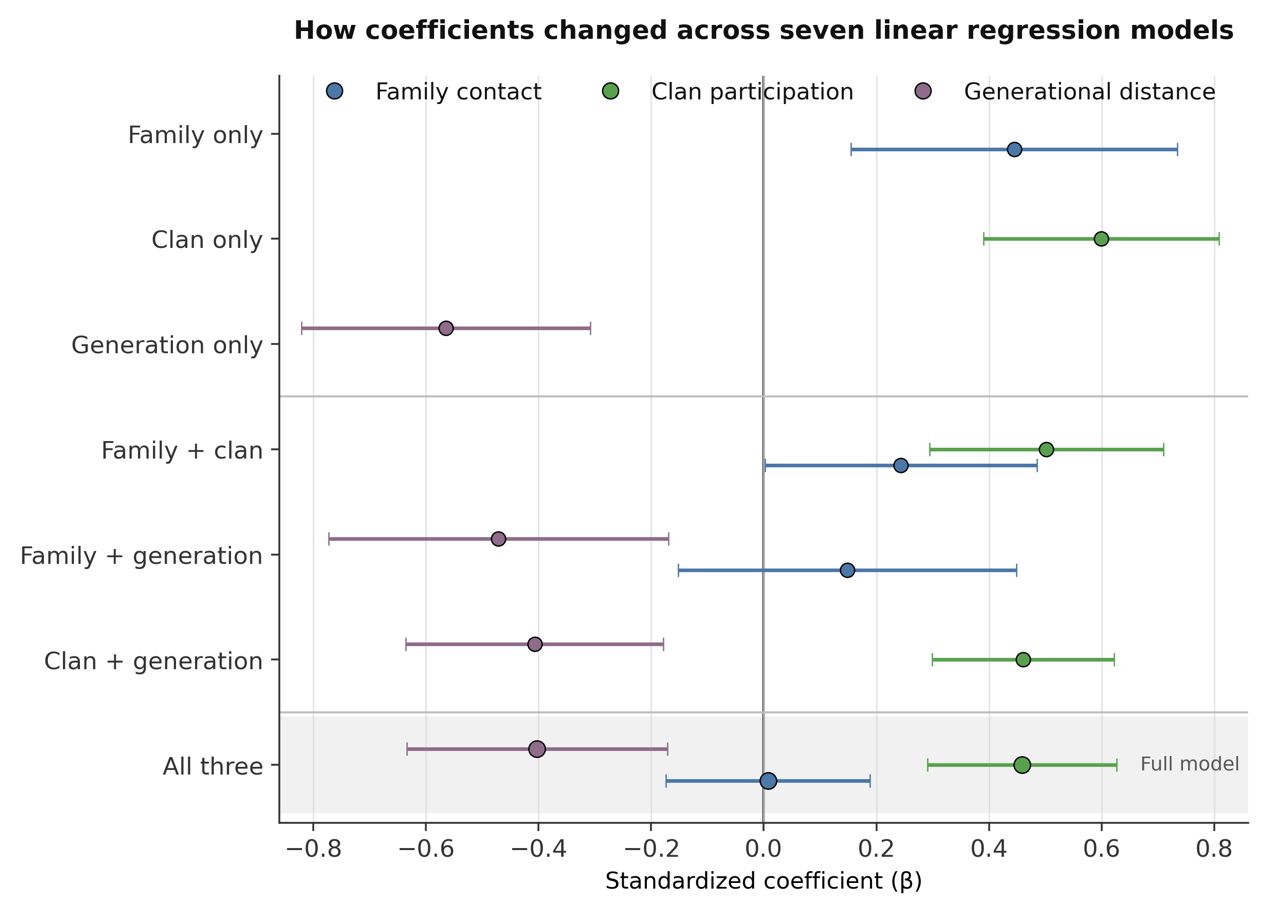
The questionnaire confirmed the strong emotional attachment that first-generation overseas Fujianese still have toward Fujian as their homeland. Among the respondents, 92.86% still regarded Fujian as their “true hometown,” and 95.24% agreed that their Fujian ancestry was part of their identity. Many first-generation Fujianese who had migrated overseas had already lived abroad for a long time, yet they still called themselves Fujianese. They were still willing to return home, worship their ancestors, and care about the genealogy and the ancestral hall. A respondent in the United Kingdom said that returning to Fujian was an important part of his life. Even though plane tickets for his family of five were expensive, he still tried to take his children back whenever he could, because his parents, siblings, relatives, and ancestral roots were all there. A respondent in Indonesia said that, while living in Indonesia, she would still usually take part if her family needed to repair the ancestral hall, update the genealogy, or raise funds for clan affairs. In her view, this was not simply a matter of money, but a response to one’s ancestral origin and family ties.
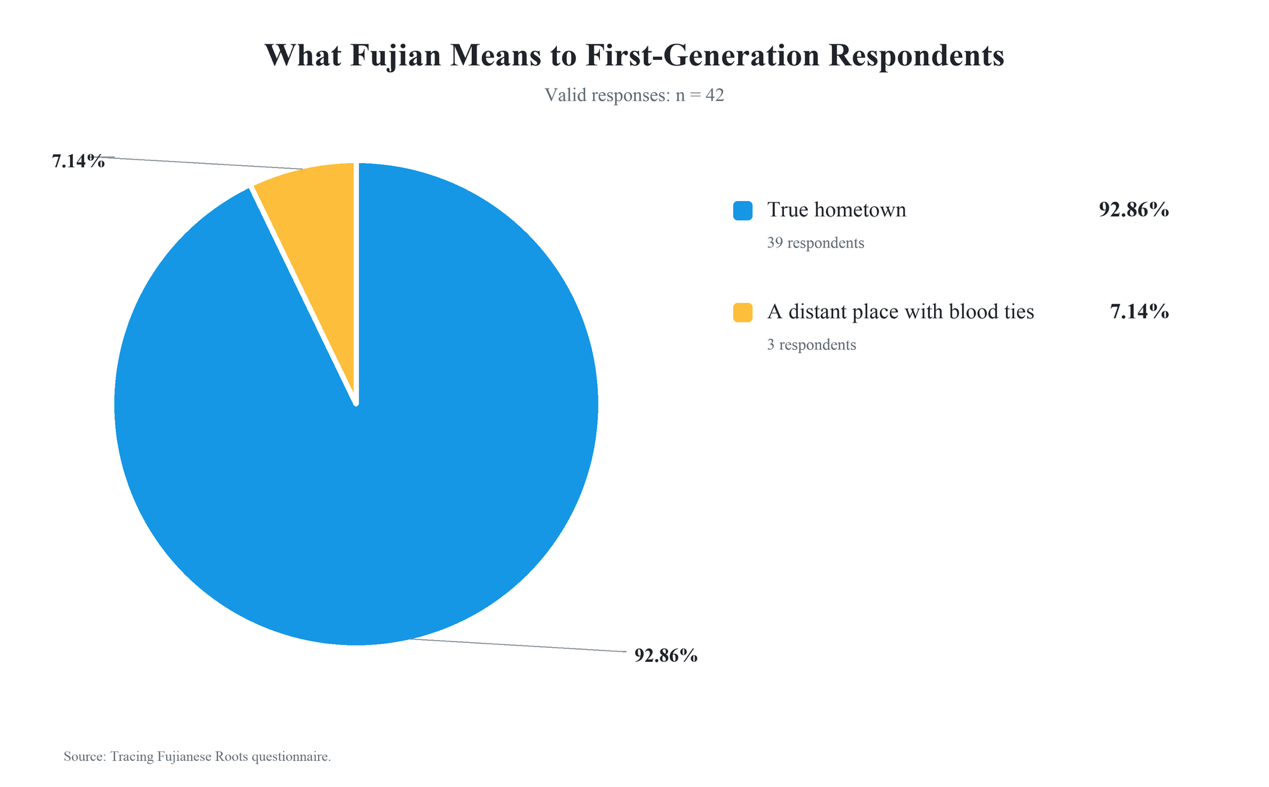
However, when my attention turned to the second and later generation, the answer became different. In the questionnaire, only 9.09% of the respondents regarded Fujian as their “true hometown”. Compared with 57.14% of first-generation respondents, only 4.55% of later-generation respondents can speak Fujian dialect. The children of the respondent in Japan were born and raised in Japan. They could understand some Chinese, but often answered their parents in Japanese. The older child could still understand a little Minnan, while the younger one could barely understand it at all. As a child, one of them even asked, “If I speak Japanese, why am I still Chinese?” That question felt like a fine crack, through which I could see family memory gradually becoming thinner as it was passed from one generation to the next.
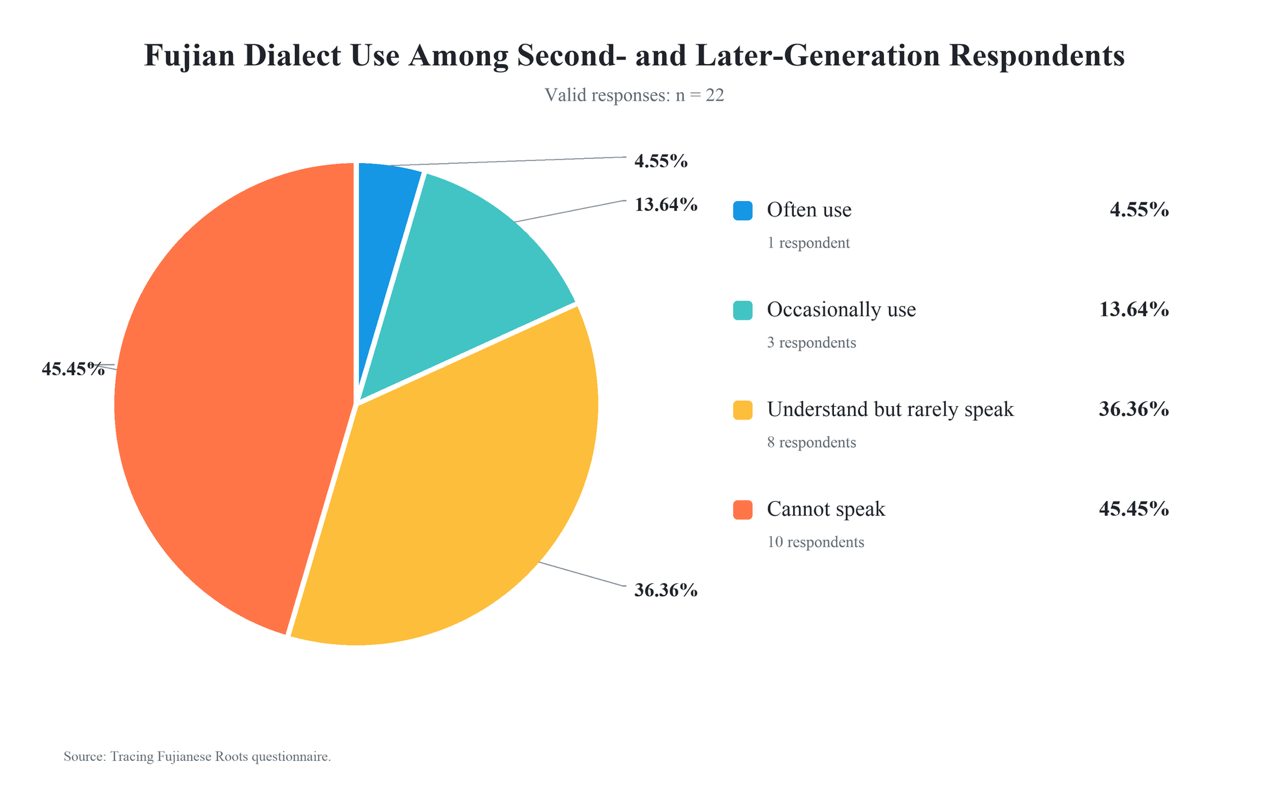
Family attachment can withstand the separation of distance, but it may not withstand the erosion of time. For the first generation, Fujian is often still “my hometown.” For the second generation, it may become “my parents’ hometown.” Further down the line, it may be reduced to no more than a place name in the geographical sense. What truly separates a person from the family lineage may not be a plane ticket or an ocean, but the moment when stories are no longer told, dialects are no longer spoken, and children no longer know why they are connected to this place. For this reason, I also personally turned the Wu clan genealogy into a searchable and visual family tree, so that younger Wu clan members overseas can use it to understand the history of the family’s growth and continuity.
Finally, I want to turn the materials from this investigation into a visual website. It aims not only to present the deep attachment that first-generation overseas Fujianese still have toward their homeland, but also to help this attachment reach the hearts of the younger generation. Ancestral halls, genealogies, inscriptions, maps, photographs, and interviews are rarely approached by young people if they remain scattered across paper pages, stone walls, and audio recordings. But if they become a clickable world map, photographs of ancestral halls, and a family tree that can be dragged and enlarged, perhaps someone will be willing to pause and look: to see who their ancestors were, where a family once traveled from Fujian, and how an ancestral hall once connected people living far away. This website is not meant for nostalgia. It is meant as a reminder that family attachment does not pass itself down automatically. It must be told, seen, and carefully passed on to the next generation.